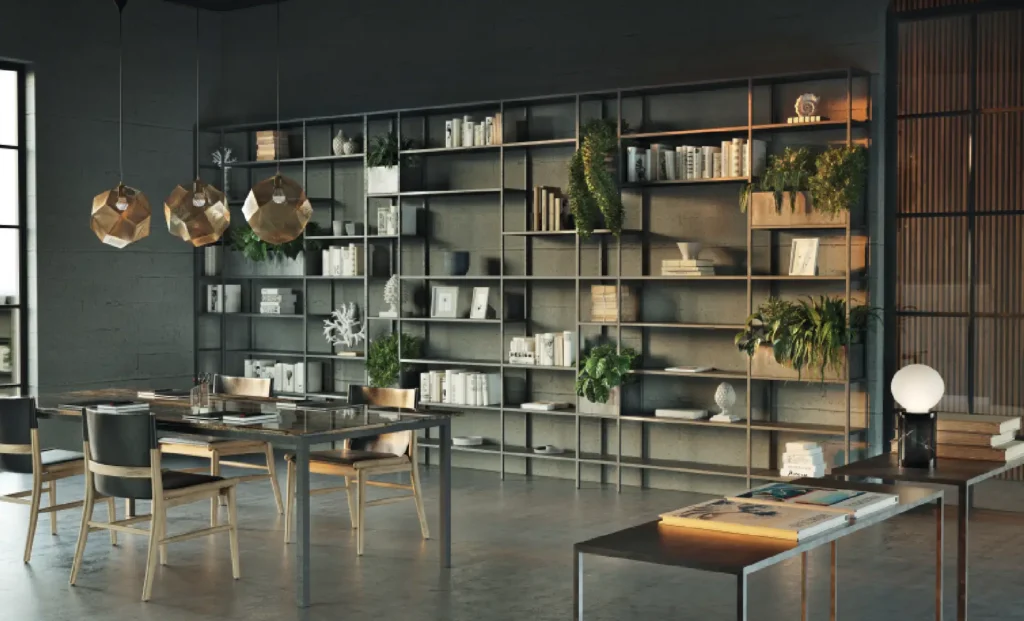

Choosing between galvanized steel, aluminum, and stainless steel for metal furniture means evaluating the intended environment, strength, finish, maintenance requirements, and consistency with the overall design.
When it comes to metal furniture and structures, material selection is never purely an aesthetic decision. Galvanized steel, aluminum, and stainless steel have different properties and meet different requirements, especially when designing outdoor furniture, elements for humid environments, commercial spaces, or furniture intended for intensive use.
The real question is not which material is universally “better,” but which one is best suited to the specific application. An outdoor table, a planter, a staircase, a cladding system, a partition wall, or a freestanding structure all have different technical requirements.
For this reason, choosing the right metal always involves balancing function, environmental conditions, durability, manufacturing processes, and aesthetic appearance.
Why material selection affects furniture performance
Every metal responds differently to its surrounding environment. Indoor or outdoor use, humidity, exposure to rain, proximity to the sea, daily wear, and maintenance requirements all influence the performance expected from a piece of furniture.
In metal furniture design, material selection affects:
Corrosion resistance
Structural weight
Stability and rigidity
Manufacturing possibilities
Type of finish
Long-term maintenance
Final aesthetic appearance
Overall project cost
An indoor bookcase, for example, may prioritize precision, slim profiles, and finish quality. An outdoor planter, on the other hand, must withstand water, weather exposure, and prolonged contact with moisture and soil. A structure designed for a commercial or hospitality environment must also account for impacts, frequency of use, and ease of maintenance.
Galvanized steel for metal furniture
Galvanized steel is steel protected by a zinc coating. This treatment improves corrosion resistance, particularly in outdoor environments or areas exposed to moisture.
Its main advantage is the protection it provides to the underlying steel. Zinc forms a barrier between the steel and the external environment while also offering protection in the presence of minor scratches or exposed areas.
Advantages of galvanized steel
Galvanized steel is particularly suitable for projects requiring structural strength, protection, and good outdoor durability.
Its main advantages include:
Good corrosion resistance
Suitability for outdoor environments
Good balance between performance and cost
High structural strength
Possibility of applying additional paint or powder coating
Suitability for frames, bases, and technical structures
Effective protection for elements exposed to water and moisture
For these reasons, galvanized steel is often used for outdoor planters, containers, terrace structures, bases, exposed frames, outdoor dining areas, and exterior furniture requiring a strong, protected structure.
Limitations of galvanized steel
Galvanized steel offers important advantages, but it is not always the best material for every project.
Its main limitations include:
A more technical or industrial appearance when left exposed
Less control over surface uniformity compared to more refined finishes
Special attention required for cutting, drilling, and welding after galvanizing
Potential aesthetic limitations in highly minimalist projects
Greater weight compared to aluminum
Need for proper drainage design to prevent water accumulation
Galvanizing must be considered from the earliest design stages. If an element is cut, welded, or modified after treatment, the continuity of the protective coating may be compromised, requiring specific corrective treatments.
Galvanized steel is therefore particularly effective when protection and structural strength are priorities. However, it requires careful consideration when the desired result involves an extremely uniform or decorative surface finish.
When should galvanized steel be used?
Galvanized steel is recommended when furniture or structures are intended for outdoor use and require strength, durability, and protection against weather conditions.
Typical applications include:
Outdoor planters
Frames and structural bases
Furniture for terraces and outdoor dining areas
Painted or powder-coated outdoor structures
Technical components that are not always visible
Commercial furniture exposed to intensive use
Structures where strength and protection are priorities
In custom metal furniture design, galvanized steel performs particularly well when the finish, intended environment, and maintenance requirements are considered together.
Aluminum for metal furniture
Aluminum is widely used in metal furniture because it combines low weight, good corrosion resistance, and ease of handling. It is particularly interesting when structural weight becomes an important design consideration.
Compared to steel, aluminum is significantly lighter. This makes it suitable for furniture and components that must be moved, handled, or installed in environments where reducing weight is beneficial, such as terraces, outdoor dining areas, panels, cladding systems, and outdoor accessories.
Advantages of aluminum
Aluminum is particularly useful in projects where lightweight construction, weather resistance, and ease of handling are important.
Its main advantages include:
Low weight
Good corrosion resistance
Easy handling and transportation
Good workability
Suitability for panels and cladding systems
Ideal properties for lightweight outdoor furniture
Possibility of painting, powder coating, or anodizing
Good performance in movable or lightly loaded elements
Aluminum is therefore suitable for accessories, panels, cladding systems, suspended elements, lightweight structures, appropriately designed planters, and outdoor furniture where weight reduction is a priority.
Limitations of aluminum
The lightness of aluminum is an advantage, but it is also a design variable that must be carefully managed.
Its main limitations include:
Lower stiffness compared to steel
Possible need for larger structural sections
Less suitability for heavily loaded structures
Limitations when very thin yet highly rigid profiles are required
Greater attention required in the design of technical details
Different structural behavior compared to carbon steel or stainless steel
Aluminum should not be selected simply because it is lightweight or performs well outdoors. Its suitability must be evaluated according to the furniture’s function, expected loads, geometry, dimensions, and installation environment.
It may not be the ideal solution when a project requires maximum stiffness, extremely thin sections, or high load-bearing capacity.
When should aluminum be used?
Aluminum is recommended when a project requires lightweight construction, weather resistance, and ease of handling.
Typical applications include:
Lightweight outdoor furniture
Movable furniture accessories
Panels and cladding systems
Suspended elements
Lightly loaded structures
Furniture for terraces and outdoor dining areas
Applications where minimizing weight is essential
In custom metal furniture design, aluminum is particularly valuable when low weight is a genuine technical requirement rather than simply a general preference.
Stainless steel for metal furniture
Stainless steel is an alloy designed to provide high corrosion resistance. Unlike galvanized steel, its corrosion protection does not depend on an external zinc coating but on the material’s chemical composition and the formation of a passive protective layer on its surface.
For this reason, stainless steel is frequently chosen for projects requiring durability, a clean aesthetic, moisture resistance, and a premium material appearance.
Advantages of stainless steel
Stainless steel is particularly effective when metal surfaces are intended to remain exposed or when the surrounding environment requires enhanced corrosion resistance.
Its main advantages include:
High corrosion resistance
Excellent durability
Suitability for humid environments
Hygienic surface properties
Distinctive aesthetic appearance
Availability of satin, brushed, and polished finishes
Suitability for frequent cleaning
Strong appeal for high-end outdoor furniture
Suitability for commercial and hospitality environments
Stainless steel is particularly suitable for kitchens, counters, worktops, exposed metal elements, premium outdoor furniture, wet areas, frequently cleaned environments, and projects where the material’s visual quality is an essential part of the design.
Limitations of stainless steel
Stainless steel offers excellent performance, but it is not always necessary or the most cost-effective option.
Its main limitations include:
Generally higher cost
Greater attention required when selecting the appropriate grade
More demanding manufacturing processes compared to some other metals
Potential visibility of fingerprints, scratches, and signs of use
Distinctive visual appearance that may not suit every project
Need to select finishes and maintenance procedures carefully
Furthermore, when discussing stainless steel, it is important to distinguish between different grades.
AISI 304 stainless steel is widely used for interiors, furniture, kitchens, and decorative elements. AISI 316 stainless steel generally offers better resistance in aggressive environments, particularly those exposed to chlorides, such as coastal locations, swimming pools, or highly exposed areas.
The choice between 304 and 316 therefore depends on the intended application. Stainless steel furniture designed for an indoor environment does not have the same requirements as an outdoor structure installed near the sea.
When should stainless steel be used?
Stainless steel is recommended when long-term durability, corrosion resistance, a refined appearance, and reliable performance are required.
Typical applications include:
Humid environments
Kitchens and counters
Premium outdoor furniture
Installations near the sea, using the appropriate stainless steel grade
Areas subject to frequent cleaning
Commercial and hospitality environments
Furniture featuring exposed metal surfaces
Projects where material quality contributes to the architectural aesthetic
In custom furniture design, stainless steel is both a technical and aesthetic choice. It does more than resist corrosion: it also helps define the visual character of the project.
Galvanized steel vs. aluminum vs. stainless steel: a comparison
Galvanized steel, aluminum, and stainless steel are not interchangeable materials. Each offers specific advantages depending on the intended application.
Galvanized steel
Galvanized steel is suitable when structural strength, protection, and good outdoor durability are required. It is commonly used for frames, planters, bases, exterior structures, and exposed furniture, especially when its technical appearance is consistent with the design or when an additional painted finish is planned.
Aluminum
Aluminum is suitable when lightweight construction, weather resistance, and ease of handling are priorities. It is particularly useful for movable furniture, panels, cladding systems, accessories, outdoor dining areas, and structures where weight must be minimized.
Stainless steel
Stainless steel is suitable when high corrosion resistance, aesthetic quality, and durability are required, particularly in humid or aggressive environments. Typical applications include kitchens, counters, premium outdoor furniture, commercial spaces, coastal environments, and designs featuring exposed metal surfaces.
Which metal is best for outdoor furniture?
When selecting a material for outdoor furniture, the level of environmental exposure is the main consideration.
In ordinary outdoor environments, such as covered terraces or urban outdoor dining areas, galvanized steel and aluminum can both be effective solutions. Galvanized steel provides strength and protection, while aluminum reduces weight and simplifies handling.
In more aggressive environments, such as coastal areas, swimming pools, highly humid spaces, or locations requiring frequent cleaning, stainless steel may offer a more suitable solution, provided the appropriate grade is selected.
For outdoor applications, material selection must also consider:
Exposure to rain
Proximity to the sea
Constant humidity
Risk of water accumulation
Cleaning frequency
Type of finish
Expected maintenance requirements
Well-designed outdoor metal furniture should prevent water accumulation, incorporate suitable drainage solutions, protect exposed surfaces, and use materials appropriate for the surrounding environment.
Which metal is best for indoor furniture?
For indoor furniture, material selection is more frequently influenced by aesthetics, precision, functionality, and surface finish.
Galvanized steel can be used when a strong, protected structure is required. However, indoor furniture projects often favor painted carbon steel, aluminum, or stainless steel depending on the desired appearance.
Aluminum can be particularly useful for panels, lightweight components, and cladding systems.
Stainless steel is often selected when metal surfaces are intended to remain visible, when a more technical aesthetic is desired, or when furniture is exposed to moisture, frequent cleaning, or intensive use.
For residential interiors, retail environments, offices, and hospitality spaces, the choice should consider:
Overall aesthetic direction of the project
Required mechanical strength
Weight of the element
Type and frequency of daily use
Desired surface finish
Ease of cleaning
Integration with wood, glass, stone, or masonry
In interior design, a material must do more than perform technically. It must also interact with the surrounding space.
How to choose the right metal for furniture
Choosing between galvanized steel, aluminum, and stainless steel begins with a series of practical questions.
Will the furniture be used indoors or outdoors?
Will it be directly exposed to rain?
Will it be installed near the sea or in a humid environment?
Does the structure need to be lightweight or highly rigid?
Will it need to support significant loads?
Will the metal be painted, coated, or left exposed?
Will the furniture need to be moved frequently?
Is low maintenance a priority?
Does the budget prioritize performance, aesthetics, or a balance between the two?
Answering these questions helps avoid generic material choices and identify the solution that best meets the project’s technical and aesthetic requirements.
The role of design in metal furniture
Material selection should not be left until the final stages of a project. It should be addressed from the beginning of the design process.
Well-designed metal furniture results from the relationship between function, context, form, material, and finish.
An in-house technical design department makes it possible to evaluate which metal is most appropriate, determine the necessary material thicknesses, identify suitable manufacturing processes, and select the most appropriate surface treatment.
In custom metal furniture, material choice is never neutral. It determines how an element performs, how it is manufactured and installed, how it is maintained, and how it is perceived over time.