
In custom metalwork, finishing is not merely an aesthetic detail but a technical variable that directly affects lead times and production complexity.
When designing custom metal furniture or architectural metal structures, the finish is often perceived as the final decision—the one that defines the visual outcome. From a production standpoint, however, finishing is one of the variables that most significantly influences workflow organization, required processing steps, and overall lead times.
Not all finishes follow the same process. Some rely on standardized and efficient production cycles; others involve manual operations, additional quality checks, and intermediate stages that extend the path from design approval to final delivery.

Powder coating and standard cycles: why they are faster
Powder coating is one of the most efficient finishing cycles in metal fabrication. It is an industrialized, repeatable, and controlled process that reduces variability during application.
From an operational perspective, this means:
- Clearly defined preparation stages
- Standardized application phases
- Integrated quality control within the cycle
When a project uses standard finishes and readily available materials, the final finishing phase integrates smoothly with the rest of the production workflow. Process predictability minimizes unforeseen delays and bottlenecks.
Textured finishes and special treatments: why they require more time
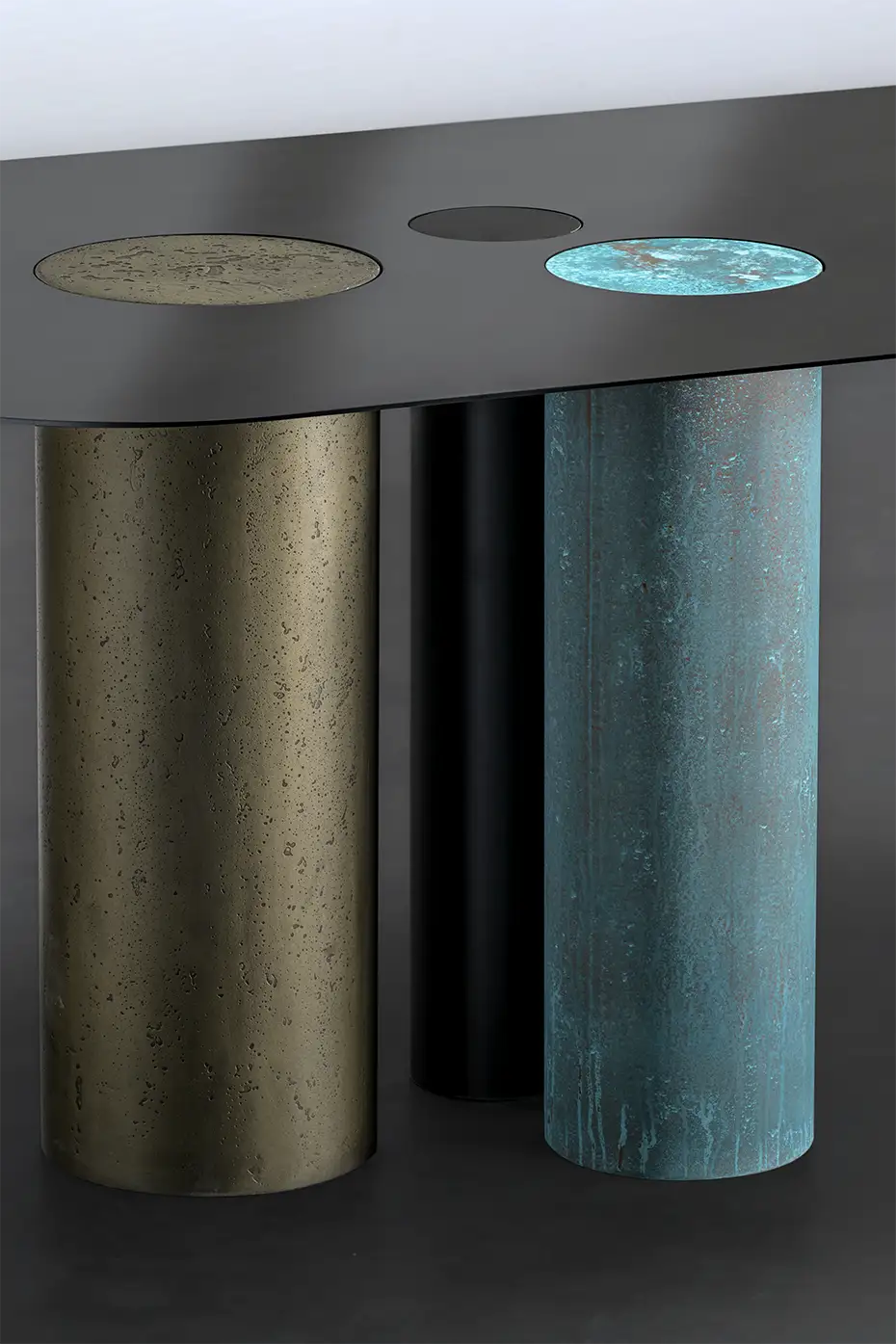
Textured finishes, burnishing, acid treatments, or liquid coatings involve more processing steps and greater variability in results.
Unlike standardized cycles, these finishing processes:
- Require more precise surface preparation
- Demand stricter aesthetic inspections
- May involve sampling or preliminary testing
In addition, materials such as stainless steel or brass behave differently from coated steel or iron. They may require longer machine time, specific fabrication techniques, and less immediate sourcing.
From a design perspective, this means that an aesthetic decision does not only affect the visual appearance of the final product, but also the overall complexity of the production process.

Finishing as a design decision, not a final detail
In custom metal fabrication, finishing should not be treated as the last step, but as a design decision to be integrated from the earliest stages of development.
Choosing a minimal and visually uniform surface may seem simple, yet it often requires tighter tolerances and stricter quality control. Conversely, certain technical or standardized finishes allow for more streamlined production cycles.
For this reason, when evaluating lead times and production complexity in custom metal furniture or architectural metalwork, finishing cannot be considered an accessory element. It is an integral part of the balance between design, manufacturing, and final performance.