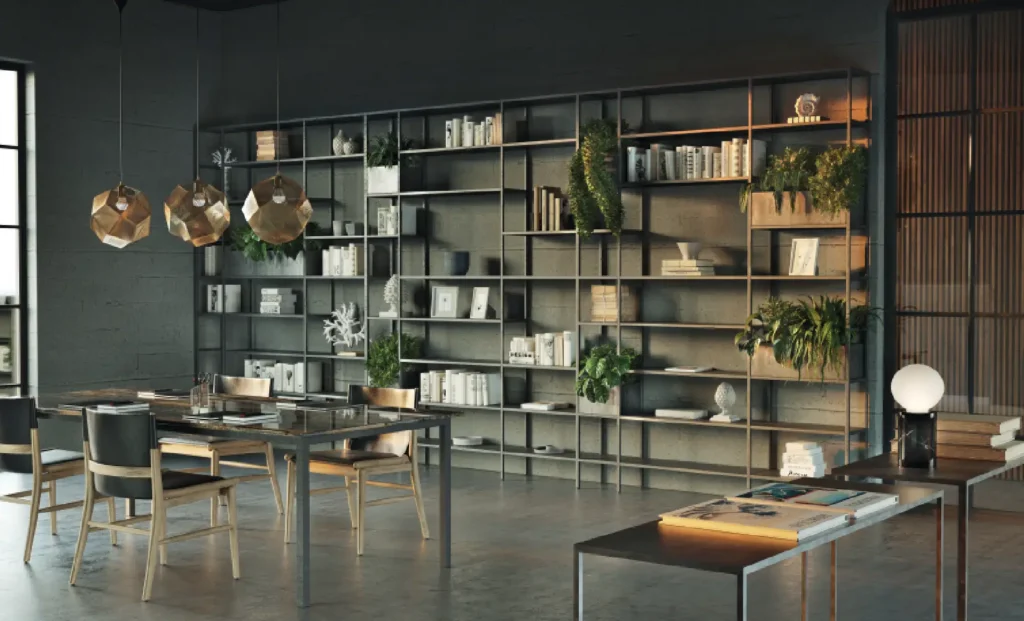

In custom metal furniture, visually lighter structures often require more design work and technical control.
In the design of custom metal furniture and architectural metal structures, minimalism is often associated with simplicity. Thin lines, reduced profiles, and clean surfaces suggest an essential object that appears almost immediate to produce. From a technical perspective, however, the opposite is often true.
When metal is used to create very light or visually thin structures, the project requires a higher level of control. Stability, rigidity, and precision must be ensured with less material, shifting the focus from the quantity of metal used to the quality of design and engineering.
Thin structures and long spans require more verification
When a metal element must support significant loads with reduced sections, the design phase must carefully verify several technical aspects. Structural rigidity, resistance to deformation, and overall stability become central factors in the project.
- This frequently occurs in elements such as:
- Very tall and slender bookcases
- Tables with minimal metal frames
- Lightweight or cantilevered staircases
- Architectural metal structures with long spans
In these cases, the project may require structural analysis, dimensional verification, or technical simulations before moving into production. The goal is to ensure that the balance between visual lightness and structural stability is truly sustainable.

Minimalism requires greater design precision
Beyond structural resistance, minimal structures also demand a much stricter level of detail control. When a project relies on few elements and clean lines, every imperfection becomes more visible.
This means working with:
- Tighter tolerances
- More precise joints
- Carefully controlled welding and assembly
In custom metal fabrication, minimalism is therefore not synonymous with production simplicity. On the contrary, it often requires a higher level of technical design and process control, ensuring that the apparent lightness of the structure is supported by genuine structural solidity.